


Ten works is an awkward number. It is enough to show range, and small enough that a curator can hold all of it in mind at once. That is exactly why so many applications go astray: ten slots invite you to include everything, and the strongest submissions resist the invitation.
What follows is a working checklist for open calls, gallery submissions and graduate shows — how to choose the ten, how to label them, and how to write a statement that sounds like a person rather than a press release.
Read the call-out before you open your folder
Before you touch your image files, read the guidelines twice and write the answers down. Do they want a single PDF, or individual JPEGs with a naming convention? Is there a size or hanging restriction? Do they expect new work only, or a survey of several years? Are installation shots wanted alongside the pieces?
Those answers shape your ten. A call-out asking for work made in the last two years is not asking for your degree show from 2016, however fond you still are of it. A gallery with low ceilings is not rejecting your large canvases; it is telling you a fact you need to work with.
Put the deadline in your diary 48 hours early. Uploads fail, files corrupt, and the final evening is a poor time to discover your PDF is 40MB.
Ten works, one argument
A portfolio is not a highlight reel. It is an argument, made in ten steps, about what you are paying attention to. Each work should answer a question the previous one raised, or push the same concern a little further.
That does not mean ten variations on a single image. A large painting, a small drawing, a photograph, a piece of text and a sculpture can all belong together, provided each one is genuinely part of the same thinking. What they share is a set of concerns: surface, language, domestic objects, the way light falls at four o'clock in winter. A viewer should sense those concerns without reading a word.
Try this. Lay the ten images out as thumbnails, all at the same small size. If two works say the same thing, one of them is surplus. If one work feels like a guest at somebody else's party, it belongs in a different application.
The cut list: what to leave out
Most artists know which three works are strongest and which two are weakest. The difficulty is the middle. Run each candidate past these questions:
- Does it survive at stamp size? If it only works at full resolution, a curator skimming on a laptop will never see it.
- Does it need explaining? If a piece only makes sense with a paragraph in front of it, either the label is doing the work or the piece isn't finished.
- Is it finished, or nearly finished? "Nearly" reads as unresolved in a submission.
- Does it duplicate another work? Keep the stronger of the pair and let the other go.
- Would you defend it in a fifteen-minute conversation? If you would rather talk about something else, that is an answer.
- Is the documentation sound? Check focus, edge-to-edge detail and colour. The photograph should show the work, not your living room.
If a call insists on ten and your tenth is padding, swap it for something that reveals process — a maquette, a study, a test tile. Process pieces often convince a panel more than a finished work that was included out of duty.
Labels and captions
The standard line
Every work needs the same information, in the same order, formatted identically. The usual UK convention runs: your name, the title, the year, the medium, the dimensions in centimetres — height, then width, then depth — followed by the price or "Not for sale". If a work is framed, say so. If it is a print, give the edition. If it is a diptych, say "two parts".
Keep it plain and consistent. A curator copying your details into a wall label should not have to guess whether 60 × 90 means width first.
Captions that add something
One sentence of real information beats three of atmosphere. "Painted from memory after a week in Shetland" tells a panel more than "exploring the liminal boundaries of landscape". Write in the present or simple past, and retire the words that turn up in every other application: explores, interrogates, celebrates, invites. They have stopped carrying meaning.
The artist statement: 150 words that earn their place
One page, roughly 150 to 250 words, in three short paragraphs. First, what you make and how, in plain language. Second, what the work is made of and what your process does to it. Third, the question or situation at the centre of it — and where the work has been shown, if that is relevant.
Do not turn your exhibition history into prose. That belongs in a CV. And do not open with a definition of art.
A workable shape, if you are stuck: I make [what] using [materials or process]. The work begins with [a place, a material behaviour, a situation] and is resolved through [method]. I am trying to [question], which is why [specific detail]. Recent work has been shown at [venues].
Read your draft aloud. If you stumble, cut. If a sentence could belong to any artist, delete it. Then ask a friend who is not an artist to tell you what they think you make. Their answer is usually more accurate than your first draft.
Files, sequence and the PDF
Name files consistently: 01_Surname_Title_Year.jpg. No spaces, no apostrophes, and keep the number so your running order survives the upload. Check the colour on a second screen, and on a phone. Work that looks rich on a calibrated monitor can look flat on a laptop.
If a single PDF is permitted, build one: contact details on the cover, statement, CV, then the ten works in order, one per page, with the label beneath each image. Export at a sensible resolution rather than maximum quality, and stay under the stated file size. If separate images are requested, sequence them in the order you want them read and confirm that the filenames sort the way you intend.
The night-before check
Run through this once, then stop:
- The ten works are the ten you mean to send.
- Every label carries the same fields, in the same order.
- Dimensions are in centimetres and match the actual work.
- The statement is inside the word limit and sounds like you.
- Files are named, sized correctly and zipped if asked.
- You have read the submission guidelines one last time.
Close the laptop. Ten good works, labelled clearly and introduced honestly, will always beat twenty that leave a curator guessing.
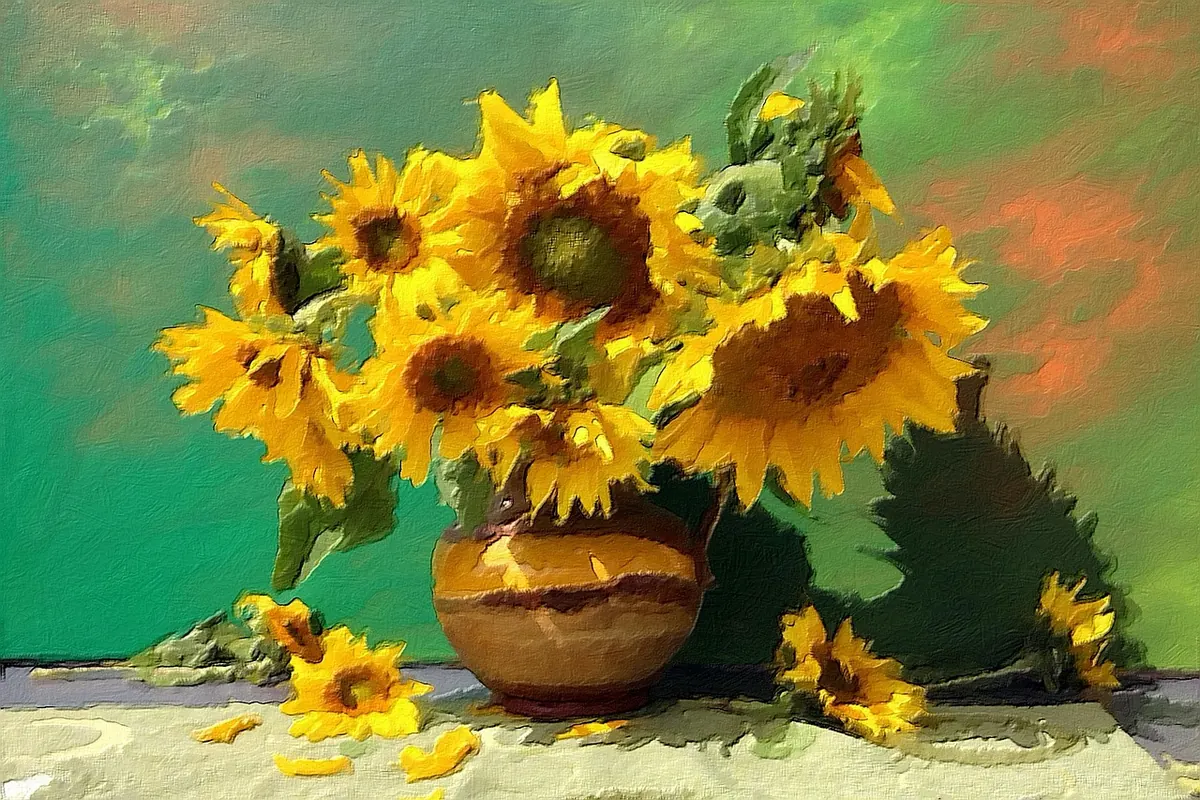
Photo: JuliusH / Pixabay