


Seasonal Portfolio Refresh: A Spring Clean for Your Illustration Work
Spring has a way of exposing things. You go to send an art director a link to your portfolio and notice the top row is work you made two winters ago: a style you have quietly moved past, a palette that no longer feels like yours, three pieces that were only ever filler. Nothing is broken. It has simply drifted.
A seasonal refresh is not a rebrand. It is a few focused hours of sorting, two or three pieces made on purpose, and an honest look at what your work is saying now — before spring submission windows open and your inbox starts moving faster than your website.
Start with the job you want next
Before you open a file, write one sentence. “This portfolio is for children's publishers, and it should show character consistency, warmth and a sense of story.” Or: “This portfolio is for editorial art directors, and it should show I can turn an abstract idea into one clear image.”
If you are applying to several markets, that is fine — build the main portfolio for one of them and let the others be variations. A portfolio aimed at picture books and gallery prints at the same time reads as undecided. Art directors notice, because they are trying to picture what you would be like to commission.
Keep that sentence visible while you work. If you cannot write it, you are not editing yet; you are just rearranging. Every keep, cut and new piece should be measured against it.
Audit what is already there
Open your site on a phone and look at it as a stranger would. Then make a list — a spreadsheet is ideal — with a row for each piece and columns for the year, client or personal, and whether it still represents you.
Then ask one question of every piece: if I submitted today, would this help me get the work I want next? Grade each one.
- Keep — strong, current, and in a direction you want more of.
- Rework — good idea, dated handling. Redraw, recolour, rescale.
- Archive — fine work, wrong now. Move it off the main page.
Watch for near-duplicates. Three pieces in the same pose and palette do not show range; they show one idea repeated. Cut the weakest two. While you are in there, fix the housekeeping you have been ignoring: dead links, an old email address, a bio that mentions a project you finished in 2021, a PDF nobody can open on a phone.
Check the thumbnails too. On a small screen, a detailed piece can turn to mush. If a strong image reads as a grey rectangle at 200 pixels wide, either crop it for the grid or choose a simpler crop that still has a focal point.
Retire an old style without throwing it away
Archiving is not deleting. Older work is evidence of how you got here, and it is useful for talks, teaching, grant applications and process pages. Just do not let it sit at the top of the grid.
Line up last year's pieces beside your newest and look for the seams: line weight, edges, texture, how you handle light, how you draw hands. If the join is jarring, either redraw one or two older pieces in the current approach, or move them down so the freshest work sets the tone.
Resist repainting everything for uniformity. Some older pieces are strong precisely because they were made differently, and a portfolio that is too tidy can feel flat.
A portfolio is not a museum of everything you can do. It is a pitch for the work you want to be hired to do next.
Add new work that fills a gap
More of what you already have rarely changes anything. New pieces should patch a hole.
Common gaps:
- Characters in motion rather than standing still.
- Two or more figures interacting in a room.
- A wide establishing scene that sets a place in one image.
- A short sequence — three panels, or a spread with space left for text.
- A small spot illustration, at the size a magazine would actually use it.
- A format you avoid: very wide, square, or tall.
Give yourself a real brief. Choose the commission you would like next and make it as though it had landed in your inbox: a book cover for a title you love, a poster for an event that does not exist, an editorial image for a piece you read this week. Keep the scope small enough to finish. Three resolved pieces beat eight half-finished ones, and unfinished work tends to stall the whole refresh.
If you want picture-book work, for example, do not just draw another standalone character. Make a spread with a clear turning point, leave a text-safe area, and show two characters reacting to the same event. That single piece can answer more questions than ten polished portraits.
Sequence, caption and tidy the edges
Order matters. Open with your strongest, most representative piece and close with something memorable. The top row should feel like one body of work even when it is not.
Captions stay plain: title, client or self-initiated, year, medium. One line, no overselling.
Then the unglamorous bits, which take twenty minutes and prevent most wasted clicks:
- Alt text on every image.
- File sizes checked on a slow connection.
- A PDF that is current, clearly named, and not enormous.
- About page and contact details up to date.
- The whole link tested in a private browser window.
Add one more pass for colour. If your images were exported years ago, they may look dull or oversaturated next to newer work. Re-export the keepers from the original files at a consistent size and colour profile so the grid feels intentional rather than accidental.
Time it around spring deadlines
Spring is busy. Publisher submission windows, editorial pitching, graduation shows, agency reviews and grant deadlines tend to cluster between March and May. Do the refresh before the first wave, not in the middle of it. Block two mornings: one for the audit and sequencing, one for the new piece. If a deadline is close, do the smallest useful version — fix the top row, update the PDF, and write your one-sentence positioning. A live, accurate portfolio with three changes beats a perfect one still unpublished in June.
Test the refresh with trusted eyes
Before you announce anything, ask two or three people to look at the site for thirty seconds. Include one illustrator and one person who hires or buys creative work, if you can. Then ask three questions:
- Which piece do you remember first?
- What kind of illustrator do you think this is?
- What would you commission from this portfolio?
Their answers may not match your sentence. That is useful. You are not looking for unanimous praise; you are looking for friction. If everyone remembers a piece you were about to archive, either move it up or understand why it still works. If no one can name a style, your top row is probably not doing its job yet.
Keep a light maintenance habit
A seasonal refresh works best when it is not a rescue mission. Set a recurring calendar note every three months. When it appears, do four small things: archive one piece, add one new piece, update one caption, and test one link. Keep a folder called “maybe” for work you are unsure about; revisiting it later is easier than deciding everything today.
By next spring, you will not be starting from drift. You will be choosing what to show, deliberately, from a portfolio that already reflects the work you want next.
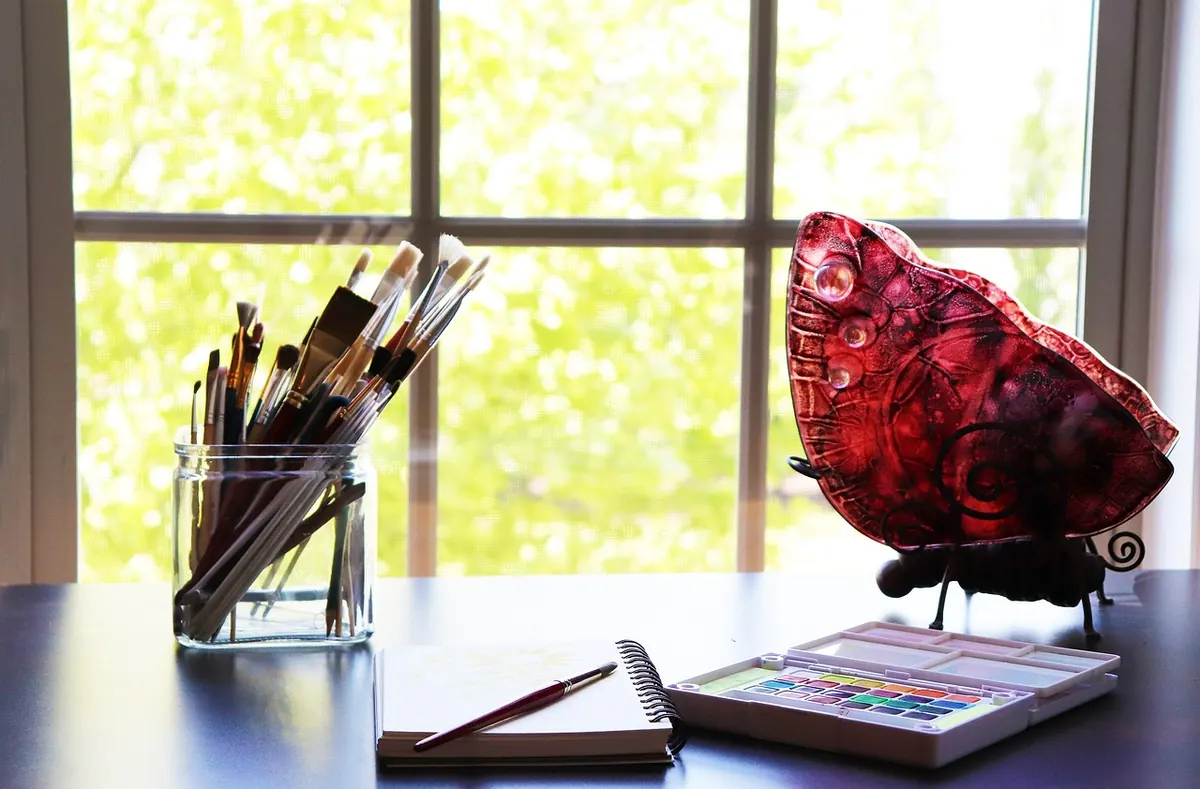
Photo: Fairytalemaker / Pixabay